top of page

Podcasts

Tags

#164: Maryport and The Vanishing Age of Sail

  • 13 hours ago
  • 2 min read

...in which we return to 19th-century Maryport in the company of author Simon Francis Brown to explore the world of regional shipbuilding through the exquisite illustrated journals of master shipbuilder Kelsick Wood.


Starting our walk at the Shipping Brow Gallery overlooking the River Ellen, we set the historic context for Kelsick’s arrival in Maryport in around 1818 – Britain as a maritime superpower, the age of empire, the political endgame of slavery – and paint a picture of the town’s bustling harbour, its numerous taverns, the lavish dinners held for Lord Senhouse, the squalor of many residents.


Battling weather on the harbour wall, we introduce Kelsick Wood, the Workington-born shipbuilder who travelled the world before acquiring the family yard at Maryport and starting the immaculate illustrated journals (excerpts below) that Simon discovered in a Greenwich archive.


Sheltering from the gale in a harbourside ginnel, we discuss the business of shipbuilding: the crafts required to bring together a finished brig; the unforgiving economics of timber imports; the impact of Cumbrian weather on operations; and the insurance stranglehold held for a time by London shipbuilders.


Retiring to the Golden Lion – where Kelsick spent many of his working hours entertaining potential customers and networking with the Maryport elite – we learn about the politically progressive family man who grieved the loss of a wife and six children, before winding down the podcast considering the numerous pressures which built on domestic shipbuilders – from overseas competition to the introduction of iron hulls – signalling the end of the age of sail.


Maryport harbour as it is today. Artwork © Mark Richards.
Our guest for the pod: author Simon Francis Brown on a breezy harbour wall.
‘Maryport’ by W.H. Bartlett / J.C. Armytage c.1841. Note the many ships moored left, and the Galloway fells across the Solway.
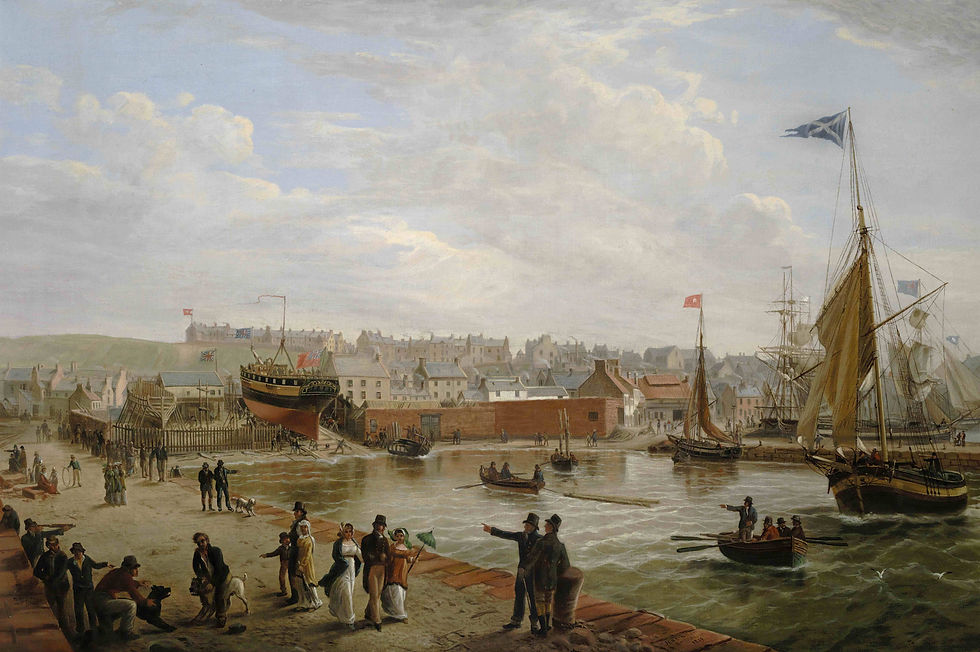
‘Launch of the Collingwood from Kelsick Wood Yard, Maryport’, by W. Mitchell, 1884. The original is on display at the Shipping Brow Gallery (image courtesy of Bonhams). The Collingwood – at this stage without masts, sails or rigging – was one of Kelsick’s ships. Crowds would gather on launch days.
Self-portrait of Kelsick from his journals, circa 1833.
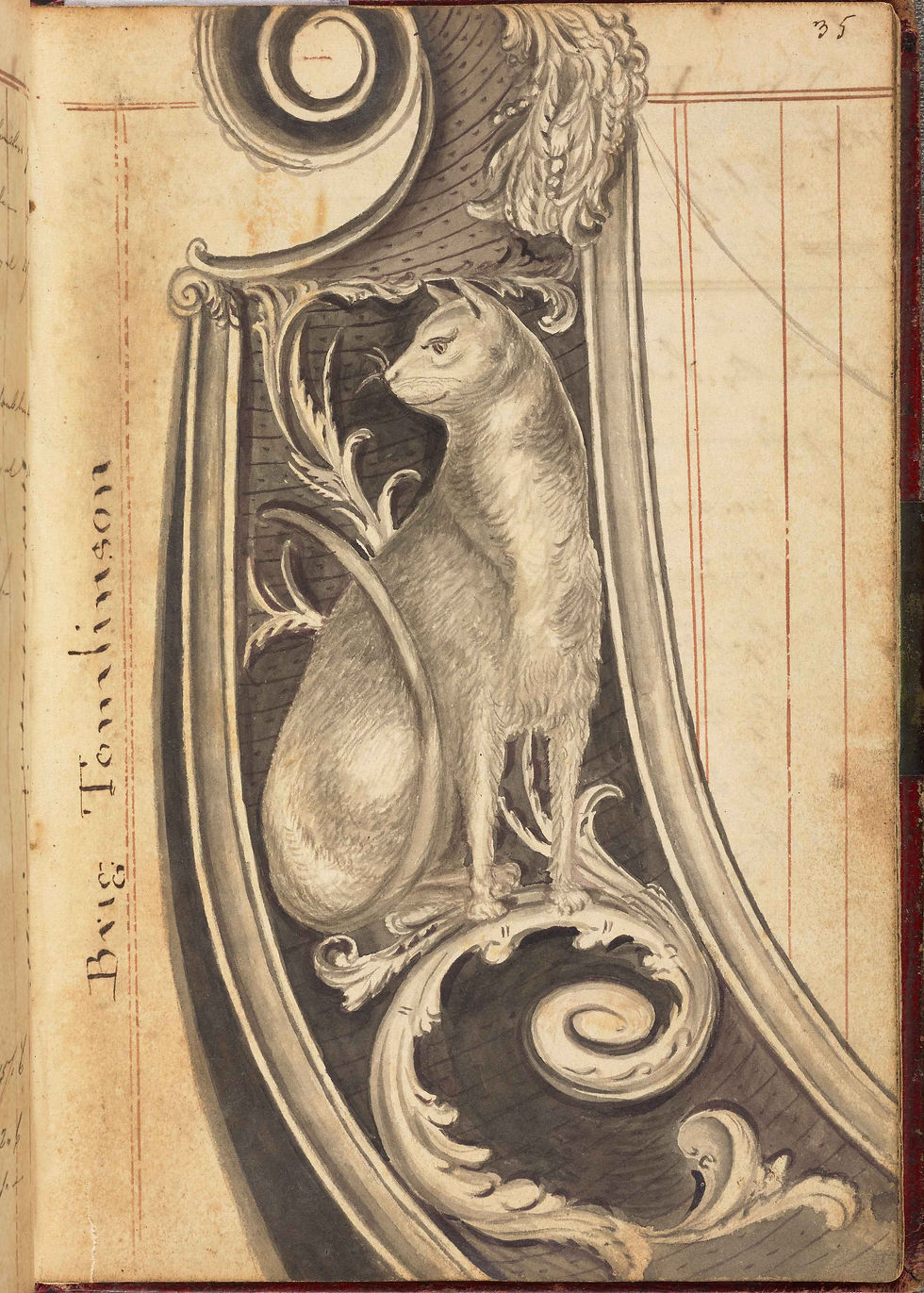
Detail from one of the journal pages; the cat is captioned as the figurehead of the brig Tomlinson (1835).
Detailed draftsmanship on display.
Kelsick would add artwork onto the same pages as notes about weather, business and local life.
Kelsick was a supporter of the abolitionist movement. This image dates to circa 1833 – the same year as the Slavery Abolition Act.
Port towns were often multicultural. John Kent – Britain’s first black policeman – started his career in the town during the 1830s.
Simon alongside Kelsick’s headstone, in the churchyard of St Mary’s Church.


© 2018–2020 Countrystride.

bottom of page